What to Confirm Before Ordering AS 1163 Steel Pipe from a Chinese Mill
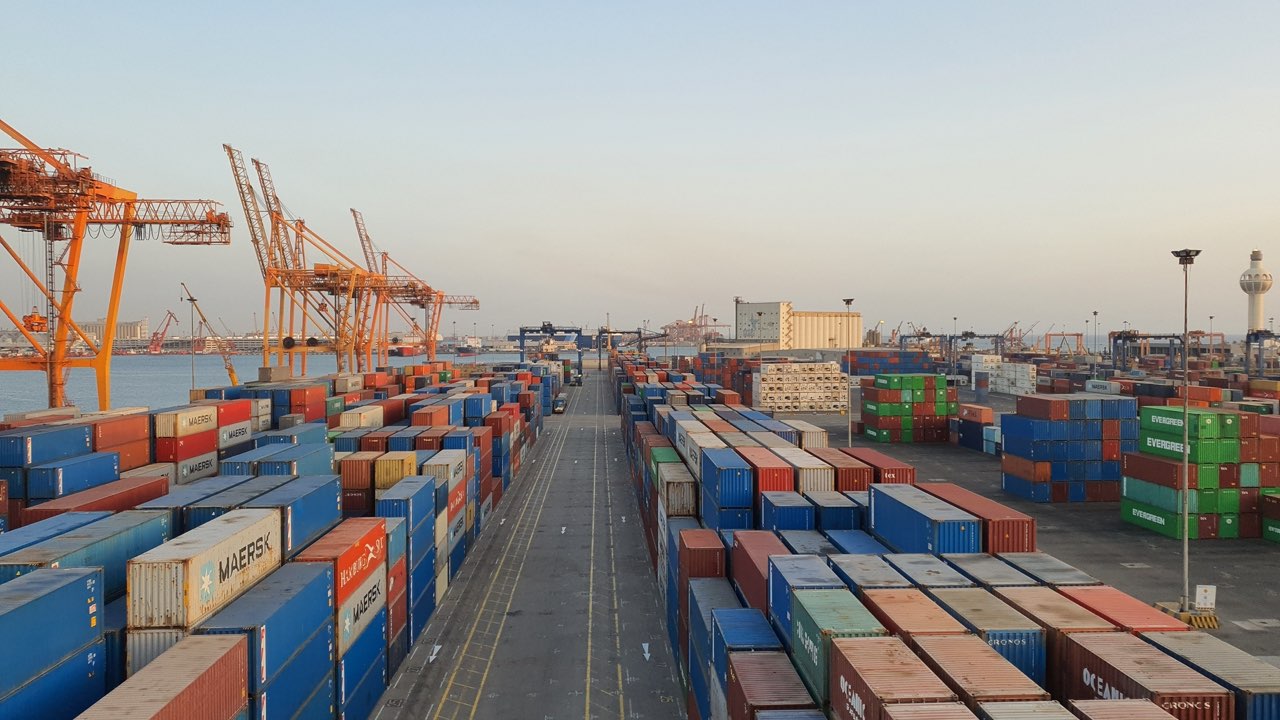
Australia imports a significant volume of structural steel hollow sections from China. For many project types, this works well — Chinese mills have the production capacity, the size range, and the price competitiveness that makes them attractive for large-volume orders. But the compliance requirements for structural steel in Australia are specific enough that sourcing from overseas mills introduces verification steps that don’t exist when buying from a local distributor holding pre-certified stock.
Getting these steps right before the order is placed is considerably easier than dealing with a non-conforming delivery on site.
ACRS Certification: Which Chinese Mills Actually Hold It
The starting point for any Australian structural steel procurement is confirming whether the supplier holds valid ACRS certification for the product in question. For AS 1163 steel pipe — cold-formed structural hollow sections — this means ACRS certification specifically covering CHS, SHS, or RHS to AS/NZS 1163.
A number of Chinese mills do hold current ACRS certification. The public ACRS register at acrs.org.au lists them by company name, manufacturing location, and product scope. This is the authoritative source — not the mill’s own documentation, not a distributor’s claims, and not a third-party certificate that claims equivalence.
Before you engage a mill on pricing, run the name through the ACRS register. Confirm three things: that the certificate is current (not expired), that the manufacturing location matches where the pipe will actually be produced (a parent company’s certification doesn’t automatically cover a subsidiary plant), and that the scope explicitly includes AS/NZS 1163 and the section types and grades you’re ordering.
Mills that don’t hold ACRS certification are not automatically disqualified from all projects, but they are disqualified from projects that contractually require ACRS-certified product — which includes most Class 2 and above buildings and an increasing share of infrastructure work in Australia. If your project specification requires ACRS, there’s no workaround.
The MTC Verification Steps That Matter for Import Orders
Assuming the mill holds valid ACRS certification, the MTC verification follows the same general approach as for any structural steel delivery, with some additional attention to detail that’s warranted for international shipments.
Heat number continuity — For hollow sections shipped in mixed bundles, confirm that the heat numbers on the MTC correspond to markings on the actual sections. On domestic deliveries, this is usually reliable. On import shipments that have passed through a trading company or intermediary, there is a higher incidence of documentation gaps where the MTC provided doesn’t actually correspond to the material shipped. The heat numbers should appear on the material itself, either as stenciled markings or on attached labels.
Grade and standard confirmation — The MTC should explicitly state AS/NZS 1163 and the grade — C350 or C350L0, for example. MTCs that reference a Chinese national standard (GB/T 6728 is the common equivalent for cold-formed hollow sections) and claim equivalence to AS/NZS 1163 are not sufficient for projects that specify the Australian standard. Equivalence claims require engineering review and are generally not accepted by certifiers as automatic substitutions.
Impact test results for L0 grades — If the order is for C350L0, the MTC must include Charpy impact test results at 0°C meeting the standard’s requirements. Chinese mills producing for the Australian market routinely run these tests when L0 grades are ordered, but the results must be on the MTC. An MTC for C350 without impact results doesn’t satisfy C350L0.
CNAS accreditation of the test laboratory — For import orders, it’s worth confirming that the mechanical testing reported in the MTC was conducted by a CNAS-accredited laboratory (China National Accreditation Service for Conformity Assessment). CNAS accreditation for the relevant test methods means the lab’s testing has been independently assessed. This isn’t a formal requirement in AS/NZS 1163, but it’s a reasonable quality check for overseas-sourced material where you can’t verify the testing directly.
Common Compliance Pitfalls in Chinese Mill Procurement
Trading companies presenting manufacturer certifications as their own — A common situation is a trading company that purchases from an ACRS-certified mill and presents the mill’s ACRS certificate as part of their documentation package. This is generally acceptable as long as the material actually comes from that certified mill and the heat traceability is intact. The problem arises when the trading company substitutes material from a different, uncertified mill without updating the documentation. Requiring mill test certificates that show the actual producing mill’s name, and verifying the ACRS certificate covers that specific mill and location, closes this gap.
“Certified to equivalent standard” language — Watch for MTCs or supplier representations that describe the product as “equivalent to AS/NZS 1163” or “produced to AS/NZS 1163 equivalent specification.” This language doesn’t mean the product was tested and certified to AS/NZS 1163. It typically means the supplier believes their product is similar. For projects where the Australian standard is specified, this is not sufficient.
Certificate date versus production date — ACRS certifications are renewed periodically. Confirm that the mill held valid certification at the time the material was produced, not just at the time the certificate was presented. The ACRS register shows current certification status; for historical verification, ACRS can confirm whether a specific mill was certified during a given period.
Section dimensions outside the ACRS scope — ACRS certification scope specifies which sizes are covered. A mill may hold ACRS certification for hollow sections up to a certain wall thickness or outside dimension, and the certification doesn’t automatically extend to sizes outside that range. For non-standard sizes — very heavy wall sections or large-diameter CHS — verify explicitly that the size falls within the certified scope.
The Practical Verification Sequence
Before committing to an import order for AS 1163 structural hollow sections, the sequence is:
- Check the ACRS register to confirm the mill holds current certification covering the specific standard, grade, and section type
- Confirm the manufacturing location matches what’s certified
- Get written confirmation from the mill that the order will be produced under their ACRS certification scope and that the MTC will identify the producing mill, the heat numbers, and the test results
- On delivery, verify heat number continuity between the MTC and the marked sections
- For L0 grades, verify impact test results are present and meet the standard
- Retain the ACRS certificate and MTC with the project records for the building’s life
This verification sequence adds a modest amount of procurement effort. It’s significantly less effort than managing a non-conformance finding after the steel has been erected, which is the alternative when these checks are skipped.
Chinese mills that hold ACRS certification and produce consistently to AS/NZS 1163 are reliable sources for Australian structural projects. The certification exists precisely to identify which mills those are. Using it is the point.